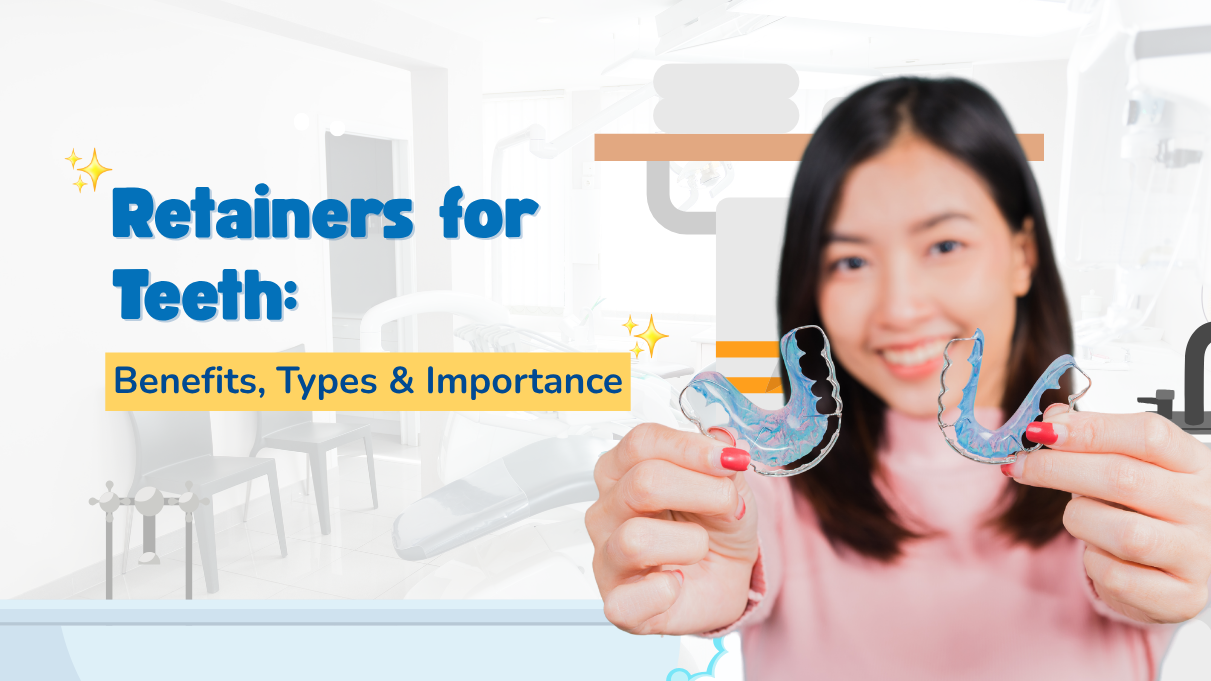
Retainers for Teeth: Why They Matter More Than You Think
Many people believe that once braces or clear aligners come off, their orthodontic journey is complete. However, keeping your teeth straight and maintaining a healthy bite requires ongoing care. This is where dental retainers play an important role.
Retainers are custom-made dental appliances designed to help maintain tooth alignment and prevent unwanted tooth movement. Whether you have completed orthodontic treatment or have noticed minor shifting in your teeth over time, retainers can help protect your smile and preserve your dental health.
Do Teeth Really Move Over Time?
Yes. Teeth naturally shift throughout life due to aging, chewing forces, tooth loss, gum disease, and changes in jaw structure. You may notice:
- Crowded front teeth
- Small gaps appearing between teeth
- Food frequently getting stuck
- Changes in your bite
- Difficulty flossing between certain teeth
Even slight tooth movement can affect both the appearance and function of your smile.
Why Retainers Are Important
Retainers help maintain the position of your teeth after orthodontic treatment and reduce the risk of future shifting.
The benefits of wearing retainers include:
Maintaining Tooth Alignment:
After braces or clear aligners, teeth naturally tend to move back toward their original position. Retainers help keep teeth in their corrected alignment.
Protecting Your Bite:
A proper bite allows the upper and lower teeth to meet correctly during chewing and speaking. Retainers help maintain this balance and prevent bite-related issues.
Preserving Previous Dental Work:
Changes in tooth position can place additional pressure on:
- Dental crowns
- Dental bridges
- Veneers
- Dental bonding
- Dental implants
Retainers help protect these dental restorations by maintaining stable tooth alignment.
Supporting Better Oral Hygiene
When teeth become crowded or overlap, brushing and flossing become more difficult. Proper alignment helps improve oral hygiene and reduces the risk of plaque buildup and gum disease.
Types of Dental Retainers
There are several types of retainers available, and the best option depends on your oral health needs and lifestyle.
Clear Retainers
Clear retainers are transparent plastic trays custom-made to fit over your teeth.
Benefits include:
- Nearly invisible appearance
- Comfortable fit
- Easy removal for eating and cleaning
Hawley Retainers
Hawley retainers use a metal wire across the front teeth attached to an acrylic base.
Benefits include:
- Durable design
- Adjustable fit
- Long lifespan with proper care
Permanent Retainers
Permanent retainers consist of a thin metal wire bonded behind the teeth.
Benefits include:
- Continuous retention
- No risk of forgetting to wear them
- Effective long-term stability
Can Retainers Straighten Teeth Again?
A common question patients ask is whether retainers can move teeth back into place.
The answer is generally no.
Retainers are designed to maintain alignment, not actively correct significant tooth movement. If teeth have shifted noticeably, orthodontic treatment such as braces or clear aligners may be necessary before a retainer can maintain the corrected position.
Who Should Consider Wearing Retainers?
You may benefit from retainers if:
- You have completed orthodontic treatment
- You notice teeth shifting over time
- Small gaps are developing between teeth
- Your bite feels different than before
- Your dentist recommends long-term retention
An orthodontic evaluation can determine the most appropriate solution for your individual needs.
How Long Should You Wear Retainers?
Many people are surprised to learn that retainers are often a lifelong commitment.
Most orthodontists recommend:
- Full-time wear immediately after braces or aligners
- Night-time wear after the initial retention period
- Long-term use to maintain results
Since teeth continue to move naturally throughout life, consistent retainer use remains the best way to preserve alignment.
How to Clean Your Retainers Properly
Proper retainer care is essential for maintaining oral health and preventing bacterial buildup.
Daily Cleaning Tips
- Brush retainers gently using a soft toothbrush
- Use mild soap and lukewarm water
- Allow retainers to air dry
- Store retainers in their protective case
Avoid
- Hot water
- Abrasive toothpaste
- Harsh cleaning chemicals
- Leaving retainers exposed
Deep Cleaning
A weekly deep clean can help remove plaque and bacteria using:
- Retainer cleaning tablets
- Hydrogen peroxide solutions
- Ultrasonic cleaning devices
How Much Do Retainers Cost?
The cost of retainers varies depending on the type, material, and location. Factors affecting price include:
- Clear retainers
- Hawley retainers
- Permanent retainers
- Replacement retainers
- Orthodontic consultations
Your dentist or orthodontist can provide an accurate estimate based on your treatment plan.
Final Thoughts
Retainers are an essential part of maintaining a healthy, attractive smile. They help prevent tooth movement, preserve bite alignment, protect dental work, and support long-term oral health.
If you’ve completed orthodontic treatment or noticed changes in your teeth, speaking with a dental professional can help determine whether retainers are right for you.
At Trust Dents, we believe that preventive dental care is the key to protecting your smile for life. Understanding the importance of retainers can help you make informed decisions about your oral health and maintain the results you’ve worked hard to achieve.
Trust Dents – Connecting Patients with Trusted Dental Care and Healthy Smiles.
retainers for teeth, dental retainers, clear retainers, permanent retainers, Hawley retainers, shifting teeth, tooth alignment, orthodontic retainers, bite alignment, retainers after braces, retainers after Invisalign, dental care, oral health, crowded teeth, preventive dental care, healthy smile, orthodontic treatment, retainer cleaning, teeth straightening, dental appliances